
The Perfect Addiction Recovery Center Setting- Turnkey and ready to go. Ken Weaver 231-357-0821 TraverseNorth@gmail.com
The addiction treatment industry is expanding rapidly across the United States as demand for substance abuse treatment, residential recovery programs, and long-term recovery services continues to grow.
Treatment providers are increasingly recognizing that recovery outcomes often improve when programs are delivered in structured residential environments surrounded by nature rather than traditional institutional settings.
As a result, many addiction treatment organizations are searching for large campus-style properties that support residential programming, therapeutic activities, and long-term recovery environments.
One such opportunity currently available is Rockwell Lake Lodge, a 670-acre private campus property in Northern Michigan that offers extensive infrastructure suitable for addiction recovery programs, behavioral health treatment, and residential therapy environments.
With a large lodge facility, multiple residential buildings, and a private lake surrounded by forests and trails, the property presents a rare opportunity for organizations seeking to develop or expand a residential addiction treatment campus.
Why Residential Addiction Treatment Programs Are Growing
Over the last decade, many addiction treatment providers have expanded their services to include residential treatment programs that offer immersive recovery environments.
Unlike outpatient treatment settings, residential recovery campuses allow patients to:
• live in a structured recovery community
• participate in daily therapy programs
• engage in group activities and peer support
• remove themselves from environmental triggers
• focus fully on recovery and personal growth
These programs often include components such as:
- individual therapy
- group therapy
- trauma treatment
- relapse prevention
- life skills training
- wellness programming
- outdoor therapy activities
Properties that support this type of programming require multiple buildings, communal spaces, and a peaceful environment that promotes healing.
Rockwell Lake Lodge offers many of these features already in place.
Overview of the Rockwell Lake Lodge Campus
Rockwell Lake Lodge sits on approximately 670 acres of private land in Northern Michigan, offering a secluded environment ideal for recovery and therapeutic programming.
The campus includes several key structures and facilities.
Main Lodge Facility
The centerpiece of the property is a large lodge building of approximately 12,500 square feet.
The lodge includes:
• ten private guest suites
• commercial kitchen facilities
• large dining and gathering areas
• meeting and programming spaces
• lounge and social areas
These types of spaces are extremely valuable for addiction recovery programs because they allow organizations to host:
- daily group therapy sessions
- educational recovery workshops
- shared meals
- peer support meetings
- wellness and mindfulness programs
Community interaction is a critical element of many recovery models, and this type of facility supports that approach.
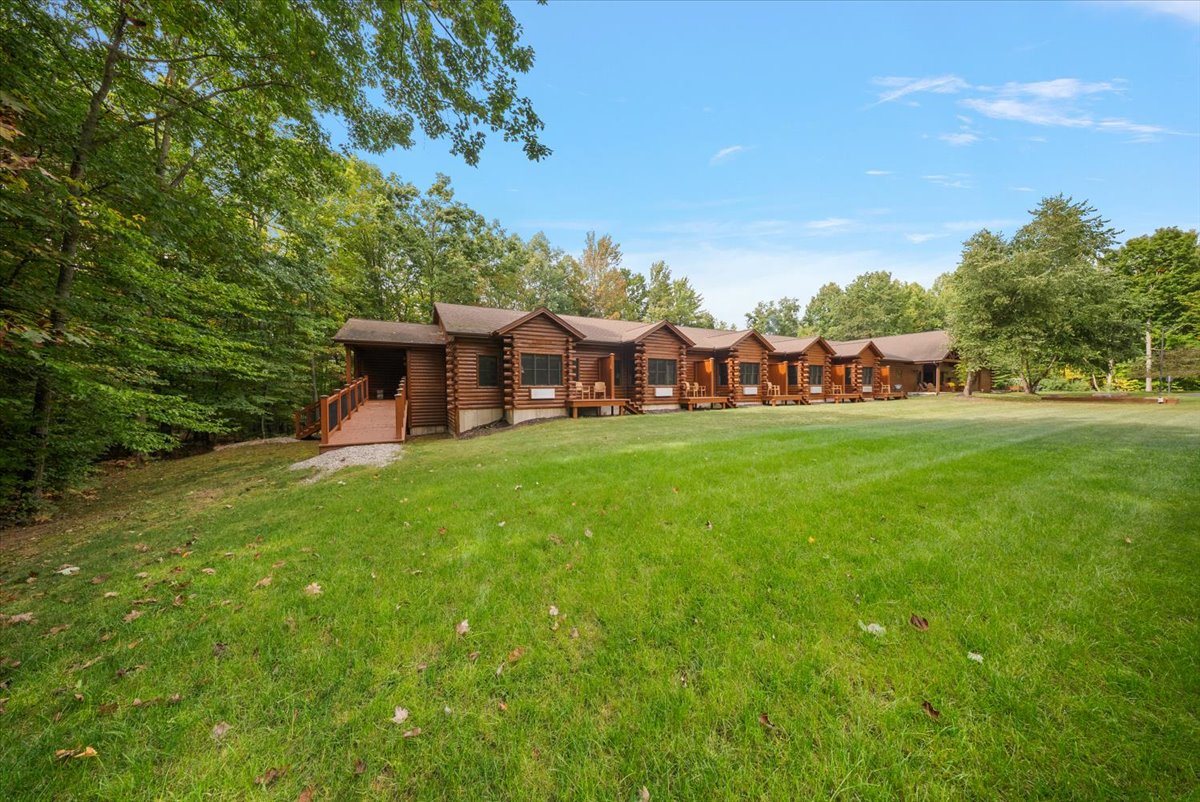
Additional Residential Buildings
Beyond the main lodge, the campus includes four additional residential buildings, each approximately 2,200 square feet, totaling about 8,800 square feet.
These buildings could be adapted for a variety of recovery program needs such as:
• additional patient housing
• therapy and counseling offices
• program classrooms
• staff housing
• transitional recovery housing
Because the buildings are separate structures, organizations can create distinct areas for different levels of care or program phases.
Natural Environment for Therapeutic Recovery Programs
One of the most compelling aspects of Rockwell Lake Lodge is the natural setting surrounding the campus.
The property includes:
• 670 acres of private land
• a 45–50 acre private lake
• miles of trails
• forestland and wildlife habitat
Many addiction recovery programs incorporate outdoor and experiential therapy activities that take advantage of natural environments.
Examples include:
- hiking therapy
- mindfulness and meditation retreats
- outdoor group therapy
- wilderness therapy programs
- physical wellness activities
- recovery-focused recreational programming
A large private property allows organizations to build structured therapeutic activities into daily program schedules.
Ideal Uses for Addiction Treatment Providers
The campus layout and infrastructure make the property suitable for several types of addiction recovery programs including:
Residential Substance Abuse Treatment Centers
Facilities designed for patients who require 24-hour structured treatment environments.
Extended Recovery Retreat Programs
Programs focused on longer-term healing and personal development.
Trauma and Dual Diagnosis Treatment Programs
Many addiction treatment programs now incorporate mental health and trauma therapy, which benefits from quiet and private settings.
Veteran Addiction Recovery Programs
Some organizations operate specialized recovery programs for veterans dealing with PTSD, substance abuse, and trauma-related challenges.
Holistic Recovery Retreats
Programs that combine therapy with wellness practices such as:
- mindfulness
- nutrition
- physical fitness
- outdoor experiences
Flexible Use Potential
An important feature of this property is that it is not subject to traditional zoning restrictions, offering flexibility for institutional uses subject to county and state compliance.
This allows addiction treatment providers to explore various program models, including:
- residential recovery campuses
- retreat-based treatment programs
- dual diagnosis treatment centers
- trauma recovery retreats
- sober living or transitional recovery programs
For organizations evaluating long-term expansion opportunities, this flexibility can be extremely valuable.
Offered Well Below Replacement Cost
Rockwell Lake Lodge is currently offered for $6.2 million.
Developing a similar property today would require:
- large land acquisition
- building construction
- utility infrastructure installation
- environmental approvals
- several years of development time
The cost of building a comparable campus could easily exceed $20 million.
Acquiring an existing property with infrastructure already in place allows organizations to accelerate program development and reduce risk.
Demand for Addiction Treatment Facilities Continues to Grow
Across the United States, the demand for addiction treatment services continues to increase due to:
- rising opioid and substance abuse challenges
- expanded insurance coverage for treatment
- growing awareness of mental health and addiction issues
- increased emphasis on long-term recovery programs
As treatment providers expand services, many are seeking large campus-style properties that allow them to deliver immersive recovery programs.
Properties with the scale and infrastructure of Rockwell Lake Lodge are increasingly difficult to find.
A Unique Opportunity for Addiction Treatment Providers
Rockwell Lake Lodge offers a rare opportunity to acquire a large residential campus property suitable for addiction treatment and behavioral health programming.
With:
• 670 acres of private land
• a private lake and trail systems
• multiple residential buildings
• a large lodge facility with commercial kitchen and meeting spaces
the property provides the foundation for a comprehensive addiction recovery campus or residential treatment center.
Learn More About This Addiction Recovery Campus Opportunity
Addiction treatment organizations, behavioral health providers, nonprofit recovery programs, and healthcare groups interested in expanding their services are encouraged to inquire.
Rockwell Lake Lodge represents a unique opportunity to create a residential addiction recovery campus in a natural healing environment.
 Traverse North -- Northern Michigan Real Estate News
Leave a comment